William C. Head, P.C.
Atlanta DUI Law Firm



By: Bubba Head, Veteran Atlanta DUI Defense Attorney with Over 48 Years Experience
In Georgia, the legal alcohol limit under Georgia law is 0.08 grams of alcohol per 210 liters of breath, or per 100 milliliters of blood, for drivers age 21 and over. Drivers under 21 face a 0.02 limit under Georgia law. Anyone operating a commercial motor vehicle faces a 0.04 limit under Georgia law. A driver can still be charged with DUI while under those numbers, so the reading alone does not decide the case.
Georgia law sets different legal limits for alcohol based on the age and license type of the driver. For drivers over 21, the blood alcohol concentration (BAC) legal limit is 0.08 percent. Drivers under 21 need only a 0.02 percent BAC to be charged with DUI in GA. Those operating a Commercial Motor Vehicle (CDL license holders), like a school bus or a big rig truck, only need a 0.04 percent BAC result to be arrested for driving under the influence in Georgia.
This "legal limit" is a per se limit. At or above the threshold, the State does not have to prove that alcohol made you a less safe driver. The number itself is the violation. Prosecutors still must prove the test was valid, but they need not show bad driving.
Drivers searching for the legal alc limit in Georgia often picture a line they can measure at the table. The statute never mentions drinks. It states the limit as grams of alcohol per 210 liters of breath, or per 100 milliliters of blood. That figure describes a concentration at the time of testing, not at the time of driving. Those two moments can sit an hour or more apart, and a person's BAC may be rising or falling in between.
Your BAC can be measured by a breathalyzer: either a portable breath test that the Atlanta Police and the Georgia State Patrol use during a roadside DUI investigation, or the post-arrest Intoxilyzer 9000. Your current blood alcohol content (BAC) depends on several variables, like how much you weigh, if you are male or female, the amount of alcohol in each drink, how many drinks you had, and how long ago you drank them. The only thing that can lower your BAC is time. None of the popular myths on beating a breath test hold up. Coffee, a cold shower, a big meal, and breathing tricks do not lower BAC.
The two devices do not carry the same legal weight. Georgia treats the roadside portable breath test as evidence that alcohol is present, rather than as proof of a specific number. The post-arrest Intoxilyzer 9000 test, requested under Georgia's implied consent procedure, produces the number the State tries to prove the per se case with.
A driver who takes the State's test also has the right under Georgia law to an additional, independent chemical test. The driver picks the qualified person or facility. The officer must make a reasonable effort to accommodate that request. If police ignored or frustrated the request, defense counsel may be able to raise it.
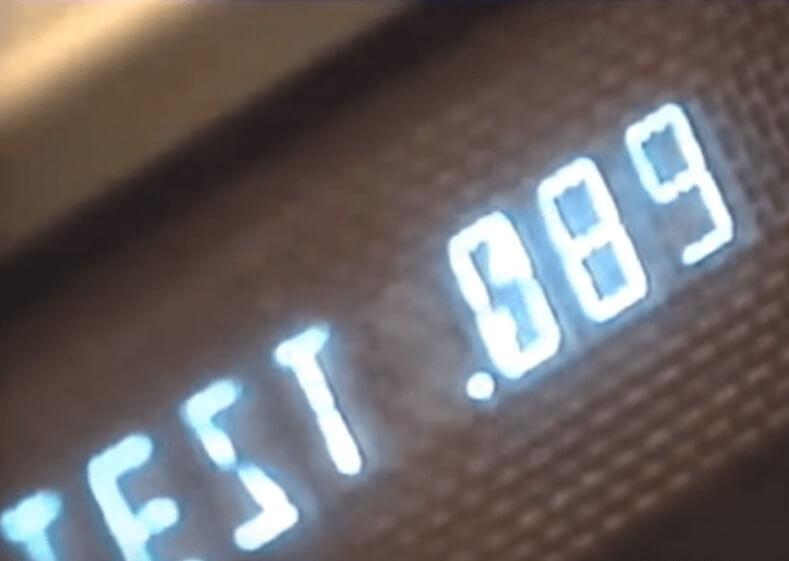
A Georgia DUI charge can result from driving with a BAC over the legal limit, known as a DUI Per Se charge. But in Georgia, you don't have to be over the legal limit to get a DUI. You can also be charged with DUI Less Safe if the officer determines you are impaired enough based on observation of erratic driving behavior like swerving or failure to maintain lane, physical characteristics that make it look like you were intoxicated such as bloodshot eyes or stumbling, or performance on the three Standardized Field Sobriety Tests.
The two theories come from two different subsections. The less safe theory covers impaired driving: it applies when a driver is under the influence of alcohol to the extent that it is less safe for the person to drive. The per se theory applies when the alcohol concentration is 0.08 grams or more within three hours after driving ended, from alcohol consumed before driving ended.
That structure matters. A driver under the legal limit can still face prosecution on the less safe count. The number alone does not decide the case. Note the terminology too: Georgia DUI laws call this offense DUI, not DWI.

Riders often ask whether you can get a DUI on a moped. The answer starts with the words of the statute. The law makes it unlawful to drive or be in actual physical control of any moving vehicle while under the influence. That phrase does not turn on engine size, on a tag, or on whether the rider needs a driver's license. It turns on whether the thing being operated is a moving vehicle.
A moped, defined in Georgia law, sits inside that definition. The result surprises many riders, because Georgia treats a qualifying moped differently for licensing and registration. The charge is still DUI. The license suspension consequences match those of a DUI in a car. Georgia's implied consent law also covers the chemical test an officer requests after a moped arrest.
Bicycles, golf carts, and electric scooters raise the same threshold question. Georgia courts look at whether the device being operated is a moving vehicle under the statute. The answer depends on the facts and on the definitions in Title 40. A rider facing this charge should talk with defense counsel, because the vehicle-type question is fact-specific.
Defending against a DUI per se charge, which is based on your blood, breath, or urine alcohol concentration, often comes down to attacking the State's breath test evidence. Counsel uses two main tools. A motion in limine, filed before trial, challenges the reliability or admissibility of the result. A motion to suppress attacks the test based on legal violations. Which attacks fit depends on the facts of the stop.
Maintenance and calibration records. The Intoxilyzer 9000 is a machine, and machines drift. Defense counsel may request inspection certificates, repair history, and diagnostic records for the instrument used. An overdue inspection or a repair logged near the test date may give the defense a basis to question the reading.
Operator certification and the observation period. Only a certified operator may run the test. Georgia's method also calls for an observation period before the breath sample. That period guards against mouth alcohol from burping, vomiting, or a recent drink. If the timeline in the record does not add up, counsel may be able to challenge the result.
The implied consent notice. The officer must read the correct notice, in the correct form, and at the right time under Georgia law. A notice read late, read to the wrong license category, or reworded in a way that misstates the consequences may support a motion to suppress.
The three-hour testing window. The per se offense is tied to an alcohol concentration measured within three hours after driving ends. Counsel may attack that link where the test sits near the edge of the window. The same is true where the State cannot connect the reading back to the driving.
Denial of the independent test. The driver has a right to an additional test by someone of their own choosing. Officers may not refuse a reasonable request or hold the driver so the test becomes impossible. Where that happens, counsel may ask the court to exclude the State's result.
No motion succeeds on its own. Each argument depends on records, timing, and the facts of the arrest.
If you face a DUI charge built on blood or breath alcohol evidence, our Atlanta DUI lawyers can review how that number was produced. The defense work at William C. Head, PC focuses on challenging Intoxilyzer 9000 breath testing and the procedures behind it in Atlanta-area courts. Call our DUI defense firm today at 404-567-5515, or fill out our no-obligation online case evaluation form.
Bring what you already have. The citation, the implied consent notice, and the printed breath test result tell a lawyer more than a long description of the night. Write down the arrest date too. The administrative license action runs on its own clock, and that clock starts at the arrest. Under Georgia law, you have 30 days from the date of the notice of intent to suspend to request a hearing. Confirm the date printed on the notice you were served.
Every case is different and results depend on the specific facts. Past results do not guarantee a similar outcome. What a lawyer may be able to do about a BAC reading depends on the records, the timing, and the facts.

No fixed number of beers puts a driver at 0.08. BAC depends on body weight, biological sex, food in the stomach, the time between drinks, and the alcohol content of each drink. Two people can drink the same thing and test differently. That is why a search like "how many beers for legal limit" never returns a number you can trust.
Start with what a standard drink means. A standard drink is roughly 12 ounces of beer at 5 percent alcohol, 5 ounces of wine, or 1.5 ounces of 80-proof spirits. Each holds about the same amount of pure alcohol. A 16 ounce craft beer at 7 or 8 percent alcohol is close to two standard drinks. Counting bottles understates what a person actually drank.
Time pushes the other way. The liver clears alcohol at a roughly steady rate, and nothing speeds it up. Drinks taken close together stack faster than the body clears them. The same drinks spread across an evening partly clear as you go. So the question of how many beers put a driver over the limit has no answer without knowing when each drink ended.
The BAC calculator on this site gives a rough estimate, and an estimate is all it is. No calculator, app, or rule of thumb predicts what a breath machine will report. Treat any number you generate as a guess, not as permission to drive.
One point matters more than the arithmetic. A driver who tests under 0.08 can still be arrested and prosecuted for DUI Less Safe. Staying under the number is not the same as being safe to drive. Drinking and driving can support a charge at any alcohol level, so a low reading is not a defense by itself.
How many beers does it take to reach the legal alcohol limit in Georgia?
No reliable number exists. Body weight, biological sex, food, the time between drinks, and the strength of each drink all move the result. A 16 ounce craft beer may count as nearly two standard drinks. Any estimate made at the table may be wrong.
Can you get a DUI on a moped in Georgia?
Yes, depending on the circumstances. The law reaches a person who drives or is in actual physical control of any moving vehicle while under the influence. A moped falls inside that language, so the arrest may carry the same DUI charge and license consequences as a DUI in a car.
Is 0.08 the legal alcohol limit for every driver in Georgia?
No. A reading of 0.08 or higher supports a per se charge for drivers age 21 and over. Drivers under 21 face a 0.02 limit. Anyone driving a commercial motor vehicle faces a 0.04 limit. The lower limits may apply even when the driver feels fine.
Can you be charged with DUI in Georgia if your BAC is under 0.08?
Yes. DUI Less Safe allows a charge when alcohol makes a person less safe to drive, whatever the number shows. Officers may point to driving, appearance, and field test performance. A low reading may help the defense, depending on the facts, but it does not end the case.
How long does it take for your BAC to drop back below the legal limit?
Only time lowers BAC, and the rate varies from person to person. Coffee, food, and cold air do nothing. No one can predict the hour a specific driver drops below 0.08. Waiting a set number of hours is not a safe rule.
These answers are general. Georgia DUI cases turn on their own facts, so talk with a Georgia DUI lawyer about yours.