William C. Head, P.C.
Atlanta DUI Law Firm



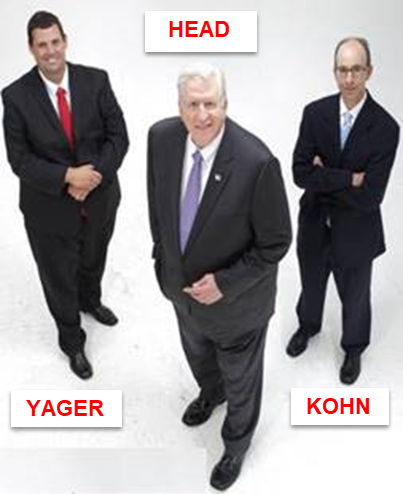
By: William C. Head, Founder of Mastering Scientific Evidence in DUI-DWI Cases, Criminal Defense Lawyer and DUI attorney Atlanta
The modified Romberg test is one of the most frequently challenged exercises in Georgia DUI investigations. In 2017, the Supreme Court of Georgia addressed its admissibility in Mitchell v. State, 301 Ga. 563. This case continues to shape how defense attorneys litigate field sobriety evidence.
Our DUI defense law firm answers the phone 24 hours a day. Call (404) 567-5515 now for a FREE attorney consultation with a co-author of Georgia’s leading law book on DUI laws.
Mitchell arose from the State Court of Fayette County in an alcohol less-safe DUI case. The defendant filed pretrial motions – a motion to suppress and a motion in limine – challenging the Romberg test evidence. The Georgia Supreme Court held that, on the evidence put up at that hearing, admissibility of the Romberg test is subject to a scientific-foundation determination. This applied the Harper standard, which governed scientific evidence in criminal cases at the time. The trial court denied the motions without ever conducting that analysis. The Supreme Court reversed that part of the order and affirmed the rest.
A critical point matters here: Mitchell did not disapprove, reject, or bar the Romberg test. It did not hold the test unreliable as a matter of law. The decision simply required the trial court to make that scientific-foundation call before Romberg test evidence comes in – from expert testimony, or from exhibits, treatises or the reasoning of cases in other jurisdictions. Today, Georgia's statute on expert testimony applies in all proceedings, criminal cases included, and lets courts draw on the United States Supreme Court's Daubert line of decisions. Harper supplied the analysis in Mitchell in 2017.
The original Romberg test is a neurological screening tool. It is named after Moritz Romberg, a 19th-century German neurologist. In clinical medicine, the Romberg test assesses proprioception – the body's ability to sense its position in space. Doctors use it to identify neurological conditions affecting the sensory and vestibular systems.
The modified Romberg balance test used in DUI investigations is a different exercise. During a traffic stop, an officer instructs the subject to stand with feet together. The subject closes the eyes and tilts the head slightly back. The subject then silently estimates the passage of 30 seconds. When the subject believes 30 seconds have passed, the subject lifts the head forward and says "stop."
While the officer waits, the officer observes the subject for specific indicators. These include the direction and degree of body sway. Officers also watch for eyelid tremors. A third factor is how closely the subject's internal time estimate matches the actual 30 seconds. Some law enforcement reports use the alternate spelling "modified Rhomberg test," but the exercise is the same regardless of spelling.
The modified Romberg test is not one of the three NHTSA Standardized Field Sobriety Tests. It serves a different purpose and follows separate training protocols.
The three NHTSA standardized field sobriety tests are the HGN (horizontal gaze nystagmus) eye test, the walk-and-turn, and the one-leg stand. The modified Romberg test is not among them. Officers typically give it as a DUI drugs field test when they suspect drug impairment rather than – or in addition to – alcohol impairment, because a breath test for alcohol will not show a drug.
ARIDE and DRE programs teach officers to administer the modified Romberg test. ARIDE stands for Advanced Roadside Impaired Driving Enforcement. DRE stands for Drug Recognition Expert. These programs are part of a broader evaluation. Officers learn to look for specific modified Romberg test clues during the exercise. In Mitchell, the officer's knowledge of the test came from DRE school, and on cross-examination he acknowledged that he knew of no validation studies for it.
The clues officers score include body sway. This means both its direction (front-to-back, side-to-side, or circular) and its magnitude. Officers also watch the subject's closed eyelids for tremors or fluttering. The third scored element is the subject's time estimation. If the subject says "stop" well before 30 actual seconds have passed, officers record that gap as a potential indicator. If the subject says "stop" well after 30 seconds have passed, officers also record that gap.
A positive Romberg test means the officer observed one or more of these clues. This may be documented in the arrest report as evidence supporting the officer's opinion that the subject was impaired.
Georgia drivers should know that all field sobriety tests – including the modified Romberg test – are OPTIONAL. A driver may decline to perform roadside exercises. There is a trade-off, though, and Mitchell makes it plain. The Supreme Court held that a basic field sobriety test is not a search under the Fourth Amendment, and that the trial court was right not to suppress Mitchell's refusal to take one. A refusal is not automatically kept out of evidence.
Mitchell v. State, 301 Ga. 563 (2017) is the leading Georgia appellate decision addressing the Romberg test in a DUI prosecution. Understanding its actual holding matters for any driver or attorney dealing with this evidence.
The case began in the State Court of Fayette County as an alcohol less-safe DUI prosecution. Before trial, the defense filed a motion to suppress and a motion in limine. Both sought to exclude the Romberg test evidence. The trial court denied both motions, holding that the Romberg test is not a scientific test requiring a Harper foundation. It then certified the ruling for immediate review, and the Supreme Court granted Mitchell's application for an interlocutory appeal.
The Supreme Court of Georgia reversed that ruling and affirmed the rest of the order. The Court held that, on the evidence presented at the hearing in that case, admissibility of the Romberg test is subject to the Harper standard. Under the Harper v. State framework that governed scientific evidence in criminal cases in 2017, the trial court had to decide whether the technique had reached a "scientific stage of verifiable certainty." The only witness on the test was the city police officer, and no scientific or medical testimony was offered at all. Failing to conduct that analysis was the error.
What Mitchell did not do is equally important. The Court did not categorically disapprove or ban the modified Romberg test. It did not rule that the test is unreliable as a matter of law. Its reasoning was narrower. What eyelid tremors mean, what a person's internal clock means, and whether a five-second margin either side of 30 seconds shows impairment are not matters of common sense or experience, nor are they obvious to the average lay observer, so a court has to examine them first. The Court drew the same line it draws for the HGN test, while treating the walk-and-turn and the one-leg stand as ordinary dexterity exercises a layperson can judge.
When Mitchell was decided in 2017, the Harper v. State standard governed the admissibility of scientific evidence in Georgia courts. That standard asked whether the procedure or technique had reached a "scientific stage of verifiable certainty." The trial judge makes that call on the evidence available to the court, not by counting the consensus in the scientific community.
Georgia's evidence framework has since changed. The expert testimony statute now applies in all proceedings, criminal cases included. It lets a qualified expert give an opinion only where the testimony rests on sufficient facts or data, is the product of reliable principles and methods, and applies those methods reliably to the facts of the case. The statute also says Georgia courts may draw on the United States Supreme Court's decisions in Daubert and the federal cases applying it. Those decisions discuss factors such as whether a technique can be tested, whether it has been peer reviewed, its known error rate, and its general acceptance in the relevant scientific community.
In practical terms, a defense attorney may challenge the scientific foundation of the modified Romberg test. On a party's motion, the statute lets the court hold a pretrial hearing on whether the witness qualifies as an expert and whether the testimony meets those requirements. Whether the modified Romberg test would survive such a challenge depends on the facts and the expert testimony offered. It also depends on the trial court's analysis. Mitchell required that the determination be made. The statute sets the reliability requirements the testimony has to meet.

Georgia DUI defense attorneys may challenge modified Romberg test evidence through several avenues, depending on the circumstances of the case.
Following Mitchell, a defense attorney may file a pretrial motion in limine. This asks the court to make the scientific-foundation determination, under the standards the expert testimony statute now sets for all proceedings, before the Romberg test results reach a jury. This challenge targets the admissibility of the evidence before a jury ever hears it.
Field sobriety tests are voluntary in Georgia. Mitchell sets out when that matters. Miranda warnings must come before a request to perform a field sobriety test only once the suspect is in custody, and custody turns on whether a reasonable person in the suspect's position would have thought the detention was not temporary. A driver told he was going to jail either way may have that argument. Mitchell, told he might or might not be arrested if he performed the tests, did not.
Defense attorneys often scrutinize whether the officer followed training protocols for the modified Romberg test. Key questions include whether the officer gave correct instructions for stance, head tilt, and eye closure. Also important is whether the officer scored the clues consistently with NHTSA field sobriety test procedures.
The level of an officer's training matters. Training may include ARIDE, DRE, or basic academy instruction. This level may affect the weight a court gives to the officer's observations and conclusions. An officer without specialized training in administering and interpreting the modified Romberg test may face credibility challenges.

Conditions at the scene could affect test performance. Uneven road surfaces, poor lighting, and wind can influence balance and time estimation. Passing traffic and fatigue can also affect performance. Age, inner ear conditions, and other medical issues may all influence results. These factors have nothing to do with impairment from alcohol or drugs.
Every case is different. A Georgia DUI attorney can evaluate the specific facts and determine which challenges may apply.
You face a DUI charge in Georgia involving the modified Romberg test or other field sobriety exercises. The scientific foundation of that evidence may be open to challenge. William C. Head, PC focuses on DUI defense and scientific evidence challenges in DUI cases. Mr. Head is the founder of Mastering Scientific Evidence in DUI-DWI Cases, a national seminar series for DUI defense attorneys. The firm's attorneys include Cory Yager and Bubba Head.
Our firm defends DUI – alcohol and DUI – drugs cases in metro Atlanta and across Georgia. Call 404-567-5515 for a free lawyer consultation. Discuss your case and learn what defense options may be available.
When searching for a Georgia DUI attorney, compare credentials, legal industry recognition, and experience with scientific evidence issues. Be cautious of misleading lawyer ratings.

The modified Romberg balance test is a non-standardized field exercise used by law enforcement during DUI investigations. The subject stands with feet together, closes the eyes, and tilts the head back. The subject silently estimates 30 seconds. When the subject believes 30 seconds have passed, the subject lifts the head forward and says "stop." Officers observe body sway, eyelid tremors, and the accuracy of the time estimate. It is not one of the three NHTSA Standardized Field Sobriety Tests.
All field sobriety tests in Georgia – including the modified Romberg test – are voluntary. A driver may decline to perform roadside exercises. Mitchell v. State holds, though, that a basic field sobriety test is not a Fourth Amendment search and that a driver's refusal to take one is not automatically kept out of evidence.
Mitchell v. State, 301 Ga. 563 (2017) held that, on the evidence presented in that case, the Romberg test's admissibility as evidence of impairment is subject to a scientific-foundation determination. The Georgia Supreme Court reversed because the trial court never conducted that analysis, and affirmed the rest of the order. The Court did not ban or disapprove the test itself.
Officers trained in the modified Romberg test score three main clues. The first is the direction and degree of body sway. The second is eyelid tremors while the eyes are closed. The third is the difference between the subject's estimated 30 seconds and the actual elapsed time.
Yes. A defense attorney may ask the court, by pretrial motion, to hold a hearing on the scientific foundation of the test under Georgia's expert testimony statute. The attorney may also question whether the officer followed proper administration protocols. Attorneys may examine the officer's training qualifications. They may raise environmental or medical factors that could explain the results. Each case depends on its specific facts.
Romberg's Balancing Test GA DDS – Protecting against Driver's License Suspension Under Implied Consent Constitutionality of DUI Checkpoints in Georgia BAC Chart for Alcohol Level by Weight and Number of Drinks Field Sobriety Test Myths and Misconceptions What Does DUI Mean? How to Beat a DUI in Court DUI Defense Lawyers Association (DUIDLA) What the Romberg alphabet test is
MAIN LAW OFFICE IN SANDY SPRINGS, GEORGIA: 5590 Roswell Road Suite 200 Sandy Springs, GA 30342
MARIETTA, GA LOCATION: In Cobb County, GA 55 Atlanta Street SE Suite 400 Marietta, GA 30060
ALPHARETTA – ROSWELL – MILTON LOCATION: In North Fulton County, GA 33 S Main St Suite 302 Alpharetta, GA 30009