William C. Head, P.C.
Atlanta DUI Law Firm



Georgia is one of 38 states that allow sobriety checkpoints. Washington, D.C., also permits DUI roadblocks, though a handful of states – including Washington State – prohibit them. Before 1990, police agencies across the country used DUI checkpoints and other roadblocks to stop crime. No uniform constitutional standard existed.
That changed with the landmark U.S. Supreme Court decision in Michigan Department of State Police v. Sitz, 496 U.S. 444 (1990). In a 6-3 ruling, the Court held that properly operated sobriety checkpoints do not violate the Fourth Amendment. The majority weighed the state's strong interest in stopping drunk driving against the burden on individual motorists. Chief Justice Rehnquist cited the "carnage on our highways" as justification for relaxing the usual Fourth Amendment rule. Police normally must have individualized suspicion before stopping a driver.
The Court acknowledged that checkpoint stops are seizures under the Fourth Amendment. The brief, suspicionless detention at a properly run checkpoint was minimal. This burden was small when measured against the drunk-driving problem. That reasoning gave states a green light to set up sobriety roadblocks. They still had to follow safeguards.
Georgia took up the Sitz framework and built its own case law. The Georgia Supreme Court and Court of Appeals expanded on Sitz by requiring specific procedural elements. Law enforcement must satisfy these elements before a roadblock stop is lawful.
The three dissenting Justices – Stevens, Brennan, and Marshall – attacked the majority's reasoning. They argued that low arrest rates at checkpoints did not justify stopping every passing motorist. A few states agreed with the dissenters. Several state supreme courts have since barred suspicionless sobriety checkpoints under their own state constitutions. New Hampshire allows them only with prior court approval, and Massachusetts and Louisiana still run them. Ironically, Michigan itself – the state that brought the Sitz case – now prohibits checkpoint stops. The Michigan Supreme Court ruled that such roadblocks violated the Michigan Constitution under Article I, Section 11. Roughly a dozen states now ban DUI checkpoints for constitutional reasons.
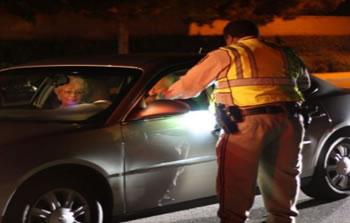
Americans resent being randomly stopped and questioned by police. Almost every other country allows fully random pullovers of moving cars. Examples include Australia, Norway, France, and Germany. But our Constitution protects citizens more fully. Blue lights and armed police at a roadside scare some drivers.
Dissenting Justice John Paul Stevens pointed out in the Sitz decision: "A sobriety checkpoint is usually operated at night at an unannounced location. Surprise is crucial to its method." Justices Brennan, Marshall, and Stevens used numbers to show how poorly DUI checkpoints perform. Roving patrol cars catch far more drunk drivers.
The dissenters argued that police checkpoints should not be allowed. The Fourth Amendment protects citizens from unwarranted stops. Police should have articulable suspicion of a crime before making a stop. No such suspicion is required at a checkpoint.
Success rates are very low at checkpoints. Only a small share of the drivers who pass through are arrested for drunk driving. Most drivers enter a single traffic lane. They must show a driver's license on the officer's demand. They must also show proof of insurance, unless the state insurance database already confirms their coverage. Police questioning at these stops takes thirty to forty-five seconds on a good day.
Some agencies post signs warning motorists about checkpoints ahead. Examples include "Sobriety checkpoint ahead" or "Driver's license check." Georgia law does not require advance warning signs, and many roadblocks in Georgia use none. What the courts ask instead is whether the roadblock itself was well identified as a police checkpoint. These "surprise" tactics stress and inconvenience the great majority of drivers, who have broken no law. Police still hold them up and question them. Constitutional experts worry that such erosion of rights brings America closer to a police state.
Hard evidence backs the dissenters' concerns. Studies by the National Highway Traffic Safety Administration and independent researchers show roving patrols work better. Police officers on roving patrol spot impaired drivers at much higher rates per officer-hour than at fixed checkpoints. Saturation patrols let police officers watch real driving behavior before they make traffic stops. Officers observe weaving, erratic speed changes, and failure to keep lanes. This allows officers to build individualized suspicion before making a stop. Checkpoints trade detection effectiveness for public visibility.
Georgia policy has important implications. Checkpoints rely on a show of force rather than targeted enforcement. Defense counsel should ask hard questions. Was the checkpoint's operational plan actually reasonable? Could those resources have done more good on roving patrols?
Not every DUI roadblock in Georgia passes constitutional review. Georgia courts apply two separate inquiries drawn from Georgia Supreme Court cases. These include LaFontaine v. State, 269 Ga. 251 (1998), Brown v. State, 293 Ga. 787 (2013), and Williams v. State, 293 Ga. 883 (2013). A checkpoint must satisfy five implementation requirements. Separately, the agency's checkpoint program must have a primary purpose other than general crime control. Brown disapproved earlier decisions that blurred those two questions together. Failure on any single requirement may result in suppression of all evidence obtained during the stop. The DUI charge may be dismissed.
The key factors Georgia courts examine include:

The decision to run a roadblock must be made in advance by supervisory personnel, not by the officers in the field. That takes the choice away from every officer out on patrol. The supervisor does not have to be a command-level executive. What matters is whether that person decided as a supervisor beforehand or as an officer working the road.
The checkpoint program must serve a legitimate primary purpose beyond general crime control. Courts judge that purpose at the programmatic level, from the agency's checkpoint policy, rather than from the motives of the officers at the scene. Checking for valid driver's licenses or screening for impaired drivers qualifies. A policy that authorizes roadblocks for general crime deterrence does not.
The Georgia requirement is that all vehicles be stopped, as opposed to random vehicle stops. Officers may not use discretion to single out specific vehicles based on appearance, driver demographics, or hunches.
The initial detention at the checkpoint must be brief. Officers should conduct a short screening interaction. They should check for signs of impairment and request a driver's license. The motorist should be released promptly unless articulable suspicion develops.
The roadblock should be identifiable as an official law enforcement operation. Marked patrol vehicles, uniformed officers, and advance warning signs help satisfy this requirement. Courts ask whether a reasonable motorist would recognize the stop as a legitimate checkpoint rather than a random or unauthorized encounter.
The officer conducting the initial screening must have sufficient training and experience. They must be able to make a preliminary determination about impairment. If the screening officer lacks solid drunk driving training, the reliability of any observations may be challenged.
When a DUI defense attorney can show that any one of these factors was not met, a motion to suppress may succeed. If the court grants the motion, every piece of evidence gathered after the unlawful stop can be excluded. This includes field sobriety test results, breath or blood test readings, officer observations, and any incriminating statements. For a first offense DUI, a second DUI offense, or cases involving drugs or contraband, an unconstitutional checkpoint can lead to complete dismissal of all charges. Our roundup of national DUI roadblock cases and other checkpoint information tracks how these rules have been applied.

The Fourth Amendment to the U.S. Constitution and the Georgia Constitution (Art. I, Sec. I, Para. XIII) protect citizens from unreasonable searches and seizures. A DUI checkpoint stop qualifies as a seizure. When law enforcement fails to follow required procedural safeguards, the stop becomes unlawful. Everything that flows from it may be suppressed.
Common defects that render a checkpoint stop unlawful include:
An unlawful police stop DUI attorney investigates the stop thoroughly. They request checkpoint authorization memos. They review roadblock operational logs. They get dash-cam and body-cam footage. They read officer training records. They match the agency's written procedures against what officers really did in the field. These records often reveal gaps between the written plan and the officers' actual conduct.
If the stop was unlawful, the exclusionary rule applies. Field sobriety test results, breath or blood test readings, and any admissions the driver made can all be excluded from evidence. In many checkpoint DUI cases, suppression of this evidence effectively ends the prosecution. Unlawful police stop attorneys focus on these procedural failures. They offer a path to dismissal that does not depend on contesting the driver's level of impairment.
If you were arrested at a DUI checkpoint anywhere in Georgia, contact our lawyers. They are available twenty-four hours a day, seven days a week. Police checkpoints can be established in any Georgia county or city, and we explain how to locate a checkpoint near you. Our firm handles checkpoint DUI cases across the state.
Checkpoint DUI cases are often litigated in Fulton, DeKalb, Gwinnett, Cobb, Clayton, Cherokee, Forsyth, and Hall County courts. Municipal courts throughout metro Atlanta and North Georgia handle these cases as well. One Gwinnett County sobriety checkpoint case we handled ran for years before it resolved. Motion-to-suppress practice varies by court. Some judges hold full hearings on roadblock challenges. Others resolve them on briefing. Familiarity with how each court handles suppression motions can matter a lot to case strategy.
The phone call is free. The professional DUI case review is free. Call (404) 567-5515. Trial experience in winning roadblock suppression motions is an important factor when hiring a DUI defense lawyer.
After being arrested for DUI in Georgia at a sobriety checkpoint, selecting the right defense attorney matters. The outcome of your case may depend on your choice. Focus on the practical skills that matter in checkpoint defense.
First, find an attorney familiar with Georgia roadblock case law. An attorney who handles checkpoint DUI cases often should be able to discuss the LaFontaine factors. They should explain how Brown v. State and related appellate decisions apply. They should describe the procedural grounds for a motion to suppress. This knowledge matters because checkpoint cases turn on whether law enforcement followed the required safeguards. The typical impaired-driving evidence is less important.
Second, consider experience with motions to suppress. Filing a suppression motion is only part of the process. The attorney must know how to subpoena checkpoint authorization documents. They must cross-examine officers about deviations from the operational plan. They must argue the legal standard well before the court.
Third, ask about knowledge of local court procedure. Each court in Georgia handles suppression hearings differently. An attorney who works often in the county or municipal court where your case is pending may understand the local process. They may know what the judge expects of a roadblock challenge.
Every experienced DUI lawyer in the firm should know Georgia's implied consent law well. They should know how to challenge breath or blood test results. Look for attorney ratings and a proven record of handling DUI roadblock cases. If cost is a concern, ask about attorney payment plans. Call (404) 567-5515 or email our criminal defense attorneys for a free consultation.
DUI roadblock and unlawful checkpoint stop cases depend on procedural details. These must be investigated quickly. Dash-cam and body-cam footage may be overwritten. Checkpoint authorization logs and operational plans may not be kept for long. Ask for these records early, and your defense stands on firmer ground.
If you were charged with DUI at a Georgia sobriety checkpoint, William C. Head, PC offers a free case review. We will evaluate whether the roadblock stop violated your constitutional rights. Our firm focuses on Georgia DUI defense. We handle checkpoint suppression challenges in Fulton, DeKalb, Gwinnett, Cobb, and courts throughout the state.
Call (404) 567-5515 anytime to discuss your case with a Georgia DUI defense attorney. We are available twenty-four hours a day, seven days a week.

Yes, Georgia permits sobriety checkpoints. Georgia is one of thirty-eight states that allow them under the framework established by the U.S. Supreme Court in Michigan Department of State Police v. Sitz, 496 U.S. 444 (1990). However, Georgia courts require checkpoints to follow specific procedural safeguards drawn from the Fourth Amendment, not from any statute. A roadblock that fails to meet these requirements may be ruled unconstitutional. Evidence from the stop could be suppressed.
A checkpoint stop may be unlawful if it fails any of the five LaFontaine requirements, or if the agency's checkpoint program has no legitimate primary purpose. Common problems include no advance supervisory decision, random rather than uniform vehicle selection, excessive detention without articulable suspicion, or a policy that authorizes roadblocks for general crime deterrence. Any one of these defects could support a motion to suppress.
It depends on the specific facts. If the checkpoint stop violated the Fourth Amendment or the Georgia Constitution, a defense attorney may file a motion to suppress the evidence obtained after the stop. If the court grants the motion, the prosecution may have no admissible evidence to proceed. The case could be dismissed. Every case is different. Results depend on the specific facts and circumstances.
You must show your driver's license on an officer's demand, and proof of insurance unless Georgia's insurance database already confirms your coverage. Beyond that, you are generally not required to answer questions about where you have been or whether you have been drinking. Georgia's implied consent law applies once an officer has probable cause to arrest you for DUI. Refusal to submit to a chemical test after arrest carries separate consequences. Your license may be suspended. Consult a qualified attorney about how implied consent applies to your specific situation.
Act quickly. Georgia law imposes strict deadlines for challenging a license suspension after a drunk driving arrest, so read what police do with your license after a Georgia DUI arrest. Speak with a DUI defense attorney as soon as possible. This preserves your right to challenge both the administrative license action and the criminal charge. Ask your attorney to request checkpoint records. These include the operational plan, officer logs, and any video footage. Request them before those records are lost or overwritten.