William C. Head, P.C.
Atlanta DUI Law Firm




By: William C. Head, Criminal Defense Attorney Atlanta GA and ABA Board-Certified DUI Attorney
A Georgia DUI arrest does not have to end in a conviction. Many drivers facing DUI charges ask two key questions: Can my DUI case be dismissed entirely? Can DUI charges be reduced to something less serious? The answers depend on the specific facts, the evidence the state holds, and the legal strategies a defense attorney pursues.
Help is available 24 hours a day. Call our DUI defense law firm at (404) 567-5515 at any hour for a FREE attorney consultation with a co-author of the leading law book on Georgia DUI laws.
Checkpoint arrests offer some of the strongest grounds for getting DUI charges dropped. The Fourth Amendment places strict limits on how police may conduct sobriety roadblocks. Georgia appellate courts have thrown out DUI arrests when officers failed to follow required protocols. When a full dismissal is not available, a skilled attorney may negotiate a reduction of the DUI charge to a lesser charge such as reckless driving.
This article explains the constitutional requirements for every Georgia DUI checkpoint. It reviews the landmark court decisions that control checkpoint legality. It covers when and how DUI charges may be dropped or reduced.

Are police roadblocks legal? If you hire a criminal defense attorney to challenge the DUI checkpoint in your case, will the challenge succeed? If the checkpoint is unconstitutional, are the DUI charges dropped? A skilled DUI attorney can help get the DUI dismissed.
A random Georgia driver license check is a "search and seizure" without any knowledge of a traffic violation. It occurs without a reasonable belief that any crime was committed. The Fourth Amendment requires that police prove such roadblocks are not an unreasonable search and seizure. Checkpoint cases offer more legal chances for getting DUI dismissed than any other DUI case type. Hiring an experienced DUI lawyer gives you the strongest chance of success.
Your Georgia DUI lawyer must understand four key U.S. Supreme Court decisions on DUI checkpoints. Your attorney must also know 15 critical Georgia appellate court decisions. These decisions control every safety checkpoint location in Georgia.
Delaware v. Prouse (1979) – DUI roadblocks and sobriety checkpoints are a valid alternative to random vehicle stops.
Michigan v. Sitz (1990) – DUI roadblocks are not an efficient use of police personnel. They are far less effective than roving patrol cars. Well – trained checkpoint supervisors and screening officers can stop all vehicles at a well – marked, safe location with careful planning. The Fourth Amendment is not violated when this is done.
City of Indianapolis v. Edmond (2000) – Police checkpoints used to stop drug couriers by way of random roadblocks were disapproved by the U.S. Supreme Court. A random roadblock that focuses on public driving safety is constitutional. But checkpoints seeking to stop drug trafficking are unconstitutional.
Illinois v. Lidster (2004) – Police at a roadblock were looking for an individual suspected of committing a serious felony offense. They established a roadblock in a suspected geographic location. A drunk driver was detected at such a checkpoint for a different purpose. This does not make the stop of a DUI suspect's vehicle unconstitutional.
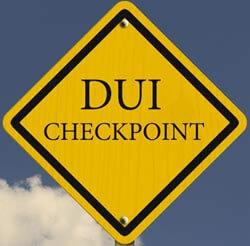
Random police stops in Georgia have been the subject of dozens of appeals over the last 60 years. These cases offer the best chance for getting DUI cases dismissed. The following descriptions of key DUI roadblock cases will help explain checkpoint laws if your Georgia traffic arrest was made at a checkpoint location.
Conner v. State (1973) – First Georgia DUI checkpoint case that followed a federal Fifth Circuit case (Myricks v. U.S.) from 1967, approving impaired driver checkpoint stops of vehicles. (GA Court of Appeals)
Christopher v. State (1991) – A properly established and supervised checkpoint must be staffed by experienced impaired driving enforcement officers. The checkpoint must be implemented in a reasonable manner. (Georgia Court of Appeals)
State v. Golden (1984) – This case set forth a list of factors essential to a proper DUI roadblock. All vehicles must be stopped. The roadblock must meet the reasonableness test and the constitutionality test. Another criterion was whether the delay to motorists was minimal. (GA Court of Appeals)
Evans v. State (1989) – A court will look at the "totality of the circumstances" to determine whether drunk driving checkpoints are constitutional. (Court of Appeals)
Blackburn v. State (2002) – For a drunk driving checkpoint to be legitimate and constitutional, the State must prove that supervisory officers approved of the checkpoint location. The State must also prove screening protocols were in place. (Court of Appeals)
LaFontaine v. State (1998) – This was an appeal handled by Atlanta DUI lawyer William C. Head. By a 4 – 3 vote, the Georgia Supreme Court upheld a two – officer, impromptu Georgia State Patrol roadblock. The U.S. Supreme Court later decided City of Indianapolis v. Edmond (2000). Under Edmond, this roadblock would have been found to be illegal. Edmond requires decision – making by supervisory personnel at the "programmatic level." This clarified an issue that was hotly disputed in LaFontaine. Two 2013 Georgia cases, Williams and Brown, corrected this erroneous prior ruling.
The LaFontaine case clarified these five mandatory drunk driving checkpoint requirements:
(Georgia Supreme Court)
State v. Morgan (2004) – A Georgia drivers license checkpoint approved for one date could not be "extended" by officers to the next day. The written drunk driving checkpoint document was the controlling legal point. Officers claiming that they were told the Georgia license check roadblocks were approved for two days did not change this. The Fourth Amendment requires strict construction against the government on issues of supervisory approval. (Georgia Court of Appeals)
Thomas v. State (2005) – A shift commander decided to implement a roadblock without checking with the police chief. This DUI checkpoint violated the Fourth Amendment. (Georgia Court of Appeals)
Baker v. State (2001) – This unanimous Court of Appeals decision established a strict compliance rule. The "decision" to conduct a checkpoint must be made by supervisory personnel at drunk driving checkpoints. (GA Court of Appeals)
In 1993, the case of Jorgensen v. State dealt with a vehicle turn into an apartment complex shortly before the driver reached the DUI checkpoint. A subsequent "chase" car was sent by police. Jorgensen explained that he was going to visit a friend and was not evading the roadblock. Police had no evidence to the contrary. The illegal seizure and detention of this driver, who committed no traffic offense, led to Jorgensen's drunk driving arrest being dismissed for a Fourth Amendment violation. (Georgia Court of Appeals)
After this case, police in Georgia learned to select a checkpoint location with no alternative turnoff streets or driveways. This prevents a motorist from escaping.
State v. Swift (1974) – Police established a "safety checkpoint" to ask drivers for their driver's license and proof of vehicle inspection and registration. Officers also looked for "fugitives and runaways." The lower court ruled that this was not constitutional. The Georgia Supreme Court overturned it. But the drunk driving checkpoint rulings in parts of this decision have been found to be bad law after City of Indianapolis v. Edmond and Illinois v. Lidster. (Georgia Supreme Court)
State v. Hester (2004) – The driver saw blue lights ahead and decided to make a U – turn to avoid being delayed. A chase car was sent to pull over Hester. He was arrested for DUI. The trial judge ruled that Hester's maneuver to turn around prior to the sobriety checkpoint location was a "legal" turnaround. The chase down and subsequent arrest was a violation of the U.S. Constitution, Amendment IV. (Georgia Court of Appeals)
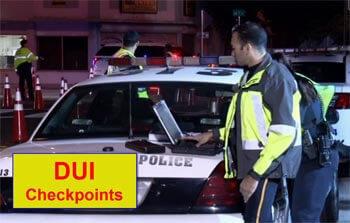
Testimony at a pretrial motion hearing on DUI checkpoints can be the government's weak point.
State v. Ayers (2002) – This drunk driving roadblock case was in Doraville, Georgia and was handled by DUI lawyer William C. Head. The supervisory officer (Sgt. McElroy) testified that he approved the checkpoint for the "primary purpose" of checking the driver's license. However, the arresting officer's sworn testimony indicated that the roadblock purpose was "general law enforcement." It was not merely to enforce Georgia DUI laws. Both the trial judge and the Georgia Court of Appeals ruled that this violated the Fourth Amendment. (GA Court of Appeals)
The prosecutor appealed. Several other citizens represented by Mr. Head and other DUI law firms were also stopped at this same Doraville Police Department checkpoint. All of those drunk driving arrests were later thrown out. DUI checkpoints with improper purposes are illegal.
Brown v. State (2013) – The Georgia Supreme Court reviewed a Court of Appeals reversal of the trial judge's ruling. The ruling was based upon non – compliance with City of Indianapolis v. Edmond. Every drunk driving checkpoint must show a "traffic safety" primary purpose. Examples include license checks, sobriety checkpoints, seat belt use, and proof of insurance. The decisions of when and where to implement DUI checkpoints must adhere to a written, published set of protocols. This opinion pointed out that the decision in LaFontaine was wrong. The sergeant in the field calling for a two – officer road check violated City of Indianapolis v. Edmond. All law enforcement agencies must have an existing set of written and published "protocols." They must follow a proper "chain of command" rather than just spontaneously setting up a roadblock. The Brown court also disapproved of the Baker v. State opinion from 2001. Fourth Amendment analysis of DUI checkpoint issues goes beyond Edmond and LaFontaine factors. Courts must consider arbitrariness of checkpoint locations and whether the roadblock serves a pretextual reason. (Georgia Supreme Court)
Williams v. State – This was a companion case to Brown v. State. It dealt with a Bibb County police sergeant doing the same thing that had been done by a Georgia State trooper sergeant in LaFontaine. A review of the roadblock's written policy from Bibb County showed that the written protocols were broader than mere traffic safety issues. The protocols covered license checks, seat belt use, and sobriety screening. The protocols were not in compliance with Fourth Amendment analysis. These written protocols doomed all similar random police safety checks where police departments had not updated their written rules for implementing roadblocks following the Edmond case. (GA Supreme Court)
Armentrout v. State (2015) – Following the rulings in Brown and Williams, Mr. Head was hired by a mother of three who was stopped on July 4, 2014 by Johns Creek, Georgia police. Despite a breath alcohol reading that was almost three times the legal limit, this case had to be dismissed. The Fulton County State Court judge failed to follow the holdings of the Brown and Williams cases. Defective police procedures at that checkpoint doomed the case. A DUI attorney filing motions to declare DUI checkpoints unconstitutional as operated by Johns Creek police could have won each roadblock arrest during that holiday weekend.
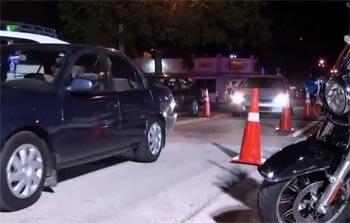
When presented with a Fourth Amendment motion to suppress, a trial judge cannot simply "assume" that a police department's written guidelines were adequate and complete.
In a case handled by William C. Head, the State had the burden to bring the pre – existing written protocols. A supervisory officer had to testify to issues relating to whether these "programmatic level" guidelines had been in place before the DUI checkpoint was established. A failure of the government to affirmatively prove this means that the roadblock fails. The Fourth Amendment protects citizens. It mandates that the State either proves their compliance with LaFontaine, Edmond, Brown and Williams, or loses the driving while intoxicated checkpoint suppression motion. (Georgia Court of Appeals)
A drunk driving conviction can devastate a career. When no accident or bad driving was observed, DUI checkpoint arrests rely entirely on the constitutionality of the roadblock. For experienced DUI attorneys, finding flaws in police protocols is how to get a DUI dismissed.
Our Super Lawyers for 2017 include law partners William "Bubba" Head, Larry Kohn and Cory Yager. When a person is arrested at a police checkpoint, using pretrial motions to have your DUI case dismissed is the primary objective of our law firm.
Our DUI law firm files motions to suppress the breathalyzer test. An order suppressing the breath alcohol test may result in getting DUI charges dropped or the DUI reduced to reckless driving in most cases. Contact our 24 – hour lawyers. We go anywhere in Georgia. Call 404 – 567 – 5515. Checkpoints can be set up by police in any city or county in Georgia. Call William Head, Larry Kohn, or Cory Yager for legal help.

Getting a DUI dismissed means the charge goes away entirely – the case is over. Can DUI charges be reduced if a full dismissal is not on the table? In many Georgia cases, the answer is yes. This depends on the facts and the prosecutor's assessment of the evidence.
The most common reduction in Georgia is a DUI reduced to reckless driving under the Georgia reckless driving statute. Reckless driving is a misdemeanor. The penalty is a fine not to exceed $1,000.00 or imprisonment not to exceed 12 months, or both. For a driver 21 or older, a reckless driving plea carries no mandatory license suspension, no risk reduction program requirement, and none of the lasting stigma that a DUI places on a driving record. A driver under 21 who is convicted of reckless driving has a license suspension imposed by operation of law.
Several factors may influence whether a prosecutor agrees to reduce a DUI charge:
Whether a charge reduction is available depends on the county, the assigned prosecutor, and the specific circumstances of the case. Some jurisdictions may be more open to negotiated reductions than others. No attorney can promise or guarantee that a prosecutor will agree to reduce a DUI charge. A defense attorney familiar with Georgia DUI law can evaluate the evidence in a particular case and advise whether pursuing a reduction is a realistic option.
Georgia uses the term "DUI" (driving under the influence). Many other states refer to the same offense as "DWI" (driving while intoxicated). Readers searching for information about DWI charges dropped are often asking the same question: Can the prosecution's case fall apart before trial?
In Georgia, DUI charges may be dropped or dismissed before trial through several pretrial pathways:
The earlier sections of this article cover numerous Georgia appellate cases – from Conner v. State to Armentrout v. State – where checkpoint – based DUI arrests were thrown out on Fourth Amendment grounds. Whether charges get dropped in any given case depends on the facts, the evidence, and the prosecuting office's assessment. No dismissal can be guaranteed.
After being arrested for DUI in Georgia, the first step is to identify an expert on Georgia DUI law. Check published attorney ratings. Look at who is behind the law firm. Review each of the trial lawyers' credentials. Check out the criminal defense attorney who leads the law office. Every experienced DUI lawyer in the law firm must have full command of DUI laws. They must possess training in all aspects of successfully challenging the driving under the influence criminal case.
A successful defense record must include suppressing breath alcohol tests. It must include knowing every prior appellate decision on the Georgia implied consent law. An increasing number of drug driving cases require that criminal defense lawyers know how to challenge a GBI blood alcohol or drug test. Being an instructor in the three NHTSA standardized field sobriety tests is also necessary.
Experienced DUI attorneys in Atlanta, Georgia will offer you a free consultation. They will explain how their criminal attorneys search for a successful defense in your case. They will aggressively represent clients to the maximum extent the law allows. Limit your search to DUI lawyers who have legitimate lawyer ratings and a history of proven results on knowing how to beat a DUI.
If we are the criminal defense attorneys for you, ask us about our attorney payment plans. Call our DUI defense lawyers now, 24 – 7, for an initial case review and free legal advice: 404 – 567 – 5515, or email our criminal justice attorneys.
Can DUI charges be reduced in Georgia?
Yes, many DUI charges can be reduced. The most common reduction is from DUI to reckless driving, which Georgia law treats as a misdemeanor. Whether this option is available depends on the strength of the state's evidence, the defendant's prior record, and the specific prosecutor handling the case. A reckless driving plea spares a driver 21 or older the mandatory license suspension and other consequences that follow a DUI conviction; a driver under 21 convicted of reckless driving is suspended by operation of law. No reduction is guaranteed, and a defense attorney should review the facts before advising on this path.
What percentage of DUI cases are dismissed in Georgia?
No reliable statewide dismissal rate exists that can predict your own outcome. Dismissal rates vary widely from county to county, court to court, and case to case. The legality of the traffic stop, the quality of breath or blood test evidence, and whether a strong defense is available all play a role. The only way to assess the likelihood of dismissal in a specific case is to have a Georgia DUI attorney review the facts and evidence.
How do DWI charges get dropped?
Georgia calls the offense "DUI," but the dismissal process is the same regardless of terminology. Charges may be dropped when a defense attorney files a pretrial motion to suppress evidence. For example, challenging an unconstitutional traffic stop, a defective checkpoint, or improperly administered breath or blood tests. If the court grants the motion and the state loses its key evidence, the prosecution may have no choice but to drop the case. Results depend entirely on the facts.
Can a DUI be dismissed after a checkpoint arrest?
Yes, and checkpoint cases often present strong grounds for dismissal. The Fourth Amendment requires police to follow strict protocols when conducting sobriety roadblocks. Georgia appellate courts have repeatedly dismissed DUI arrests when officers failed to obtain supervisory approval or did not follow written checkpoint guidelines. They have also dismissed cases when the roadblock operated for an improper purpose. The cases discussed throughout this article – including Brown v. State, Williams v. State, and Armentrout v. State – illustrate how procedural failures at checkpoints lead to DUI charges being thrown out.
After a Georgia DUI arrest, the window to act is short. Administrative license suspension deadlines begin running immediately. Evidence that could help a defense – dashcam footage, body – cam recordings, checkpoint documents – may become harder to get over time.
A confidential case review with William C. Head, PC can help identify whether a motion to suppress is realistic. We can assess whether a checkpoint challenge will work. We can determine if a negotiated reduction to reckless driving is realistic given the facts of your case. Every DUI arrest is different, and no outcome can be promised. But understanding the available options early gives a defendant the strongest position.
Call 404 – 567 – 5515 for a free consultation, or Contact Us Now to reach a Georgia DUI defense attorney who can evaluate your case.