William C. Head, P.C.
Atlanta DUI Law Firm




Over the past two decades, Georgia has set up court programs that offer treatment in place of jail. These programs serve people charged with crimes who have a drug or drinking problem, an addiction, or a mental health disorder. Georgia runs five kinds: drug court, DUI court (also called DWI court), mental health court, veterans court, and family treatment court. Mental health reports and medical studies back this approach.
One call to (404) 567-5515, at any hour, connects you with our DUI defense law firm for a FREE attorney consultation with a co-author of Georgia’s leading law book on Georgia DUI laws. We answer 24 hours a day.
Each kind of court sets its own eligibility criteria. For DUI court, Georgia law says the focus is on moderate-risk and high-risk offenders. The goal is to cut repeat offenses, protect families, and treat the root problem through counseling and therapy.
Most people in these programs have had several police encounters. Those who finish gain a smaller conviction impact and a real chance to stay out of trouble. Depending on the program, the case may be dismissed or the sentence reduced.
Georgia's Superior Courts in larger cities run strong drug court programs. These programs serve people whose charges arise from drug use, possession, or sale. Most counties have a drug court too. Drunk driving defendants with multiple DUI offenses may be able to join as well.
Drug court brings real benefits. A first offender plea on a drug charge can help someone in the program stay out of state prison. Georgia's DUI statute does not allow first offender treatment for a DUI conviction. If a person finishes before judgment is entered, the prosecutor may dismiss the case. Each drug court division sets the rules that define a successful finish.
Georgia's DUI court program has run for many years. Judge Kent N. Lawrence of Athens-Clarke County State Court founded it. Lawrence still teaches judges across America about changing lives through addiction treatment. Georgia's program leads the nation.


Under Georgia law, superior, state, and juvenile courts may set up a DUI court division. The court must have jurisdiction over DUI cases. A DUI case may be sent there when the defendant meets that division's eligibility criteria.
The county must have a court with a DUI court division. Treatment takes place in that county. So do court dates. Whether a case can move to another county's program depends on the courts involved.
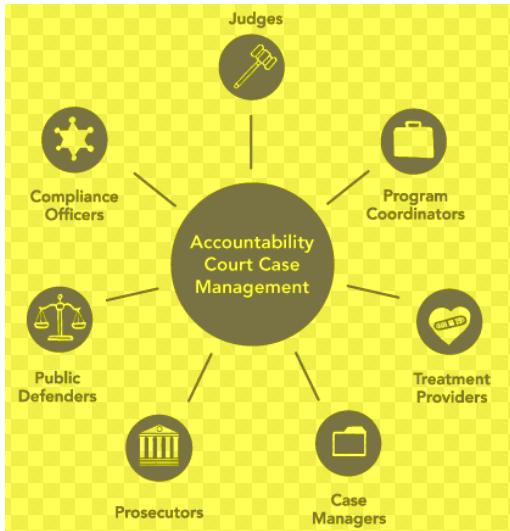
DUI courts are found mostly in counties with large populations. The DUI court team includes the judge, the prosecutor, an administrator, treatment providers, and mental health staff. Larger counties may hire two or more paraprofessionals to help oversee the program.
Some counties make jail time so harsh that people choose the program to avoid a long stay. These programs enforce their rules closely. Rules include showing up on time and giving urine or other test samples. People in the program must prove they are sober and that they follow the rules.
Defendants reach a Georgia DUI court by several paths. The most common one is a negotiated plea agreement. The defense lawyer and the prosecutor agree that the defendant will take part as part of the sentence.
A judge may also send a case to DUI court. A defense lawyer may file a motion asking for that referral. Under Georgia law, the court may assign a case before sentencing with the prosecutor's consent. The court may also assign a case as part of a sentence. And it may weigh that step when it reviews a petition to revoke probation.
Most Georgia DUI courts use a set of phases. People move through stages that get less strict over time. They must meet treatment goals, pass drug and alcohol tests, and follow court orders. Each phase may cut how often they come to court and how often they are tested.
People in the program pay program fees, treatment costs, and the cost of random tests. Amounts vary by county and treatment plan. Under Georgia law, fees paid for substance abuse treatment are not court costs or fines.
If a person breaks the rules or picks up a new charge, the court may end that person's place in the program. When that happens, the original sentence may apply. The court may weigh the reasons for the violation or the end of the program when it sentences or disposes of the case.
Note: Georgia statutes use "DUI" while national groups use "DWI court." The two phrases mean the same thing here.
In Georgia, "DWI court" and "DUI court" mean the same court. Georgia's drunk driving offense is written into the code as DUI under Georgia law. So state lawyers and statutes say "DUI court."
But the National Center for DWI Courts and the National Association of Drug Court Professionals use "DWI court" in their national standards. Both terms describe one program. It is an intensive, judicially supervised treatment court for repeat impaired-driving offenders.
Georgia law reflects this link. Under Georgia law, the Council of Accountability Court Judges must set standards for these court divisions. The standards must weigh guidelines from three sources. These are the National Drug Court Institute, the National Center for DWI Courts, and the Substance Abuse and Mental Health Services Administration.
Georgia's DUI courts follow the same evidence-based framework used across the country for DWI courts.
The National Center for DWI Courts set out 10 Guiding Principles. They are the base for DWI court programs across the country.
These are the ten principles:
Georgia's accountability court standards incorporate these principles. The Council of Accountability Court Judges runs the certification process.
Standard DUI probation may mean monthly check-ins with a probation officer and drug screens now and then. DWI court asks far more.
Participants in DWI court face frequent random alcohol and drug testing. Tests often include continuous alcohol monitoring devices such as SCRAM bracelets. They go to regular status hearings before the DWI court judge. They take part in required drug and alcohol treatment. They meet case managers and counselors on a set schedule.
This level of court oversight is what sets DWI court apart from plain probation.
DWI court in Georgia aims at repeat DUI offenders. Each division sets its eligibility criteria in its work plan. Who can take part depends on the county, the defendant's criminal history, and the results of a risk and needs assessment.
Under Georgia law, the focus is on moderate-risk and high-risk offenders. A risk and needs assessment finds those offenders.
Each division sets its own program length; no statute fixes it. Programs are split into phases. People who finish the DWI court program may get a reduced or modified sentence.
Under Georgia law, a judge in a DUI or DWI court division may not dismiss a DUI offense or restrict or vacate a DUI conviction. The DUI conviction stays on the record. But a successful finish may lead to shorter probation terms and an earlier chance to get a license back.
Doctors have named hundreds of mental health conditions. They range from relatively minor conditions such as obsessive-compulsive disorder to schizophrenia. Mental health court serves people who need medication and who must also answer for a crime. Without these courts, many of them would sit in jail or state prison with little or no care.
Under Georgia law, a court may refer a defendant who has a mental illness or developmental disability, or a co-occurring mental illness and substance abuse disorder. Some charges rule the option out. Defendants charged with murder, murder in the second degree, armed robbery, rape, aggravated sodomy, aggravated sexual battery, aggravated child molestation, or child molestation are not eligible, except in a court-supervised reentry program. Only a small number of Georgia counties run these courts so far.

Many veterans live with post-traumatic stress disorder and other well-documented conditions. Courts across the country have set up special programs that offer therapy in place of jail time.
Many veterans are homeless or live on a small, fixed budget. The justice system set up these special courts to meet those needs. Under Georgia law, any court with jurisdiction over criminal cases may establish a veterans court division.
Family violence and family stress show up at every income level. Under Georgia law, Family Treatment Court was built to reduce drug and alcohol abuse in dependency cases.
The goals of the Athens-Clarke County FTC program serve as a model. The program works to break the cycle of addiction and the neglect that follows through monitored service delivery. It limits foster care stays through ongoing case management and expedited, comprehensive permanency planning. It addresses substance abuse in deprivation cases to keep children safe and well. And it helps families achieve a healthy, speedy, and successful reunification.
Georgia has set up five kinds of accountability court. Each one has its own statute. The criminal defense lawyers at our law office can help you see whether you qualify. We can also walk you through costs, terms, benefits, and what the program asks of you.
These are the five kinds:
Related statutes:

Our law office lawyers in Atlanta have worked with dozens of accountability courts across Georgia. Our criminal lawyers – Cory Yager, Larry Kohn, and Bubba Head – know how to find the best sentencing option in each case. You will know your choices clearly.
Our goal in every case is to fight the charges hard. We look for answers that fit each client's own facts. We turn over every rock to find them.
Get free legal advice at your initial lawyer consultation.
Other valuable resources on this website:
Call our 24-hour number now: 404-567-5515.
Admission to a Georgia accountability court is not automatic. Before sentencing, the prosecuting attorney must consent to the referral. A defense lawyer can take the case to the judge and guide the defendant through the steps.
Not every defendant qualifies. Eligibility depends on the county, the specific charges, and the defendant's prior record.
The attorneys at William C. Head, PC can look at your options. We assess whether drug court, DUI or DWI court, mental health court, or veterans court may work in your county. Program spots are limited. Admission decisions often happen early in the case.
So it helps to call a lawyer before arraignment.
Call for a free consultation. We will go over your charges, your prior record, and the accountability court options where you live. Depending on the county and the facts, you may qualify for a treatment program. That program could cut your sentence and help you move forward.
Georgia's drunk driving statute uses "DUI," so Georgia courts call their programs DUI courts. The National Center for DWI Courts and the National Association of Drug Court Professionals use "DWI court." Both terms mean the same kind of program. Each one is an intensive, judicially supervised treatment court for repeat impaired-driving offenders. In Georgia there is no real difference between the two terms.
DWI court in Georgia aims at repeat DUI offenders. Each division sets its eligibility criteria in its work plan. Under Georgia law, the focus is on moderate-risk and high-risk offenders, as found by a risk and needs assessment. The prosecutor must consent to the referral before sentencing.
Georgia law does not set a program length; each division defines a successful finish. The real length depends on the county, the treatment needs of the person in the program, and how fast that person meets each phase.
If you are terminated from the program for noncompliance or a new arrest, the court may impose the original sentence. In both drug court and DUI or DWI court, the court may weigh the reasons for the violation or the end of the program when it sentences or disposes of the case.
No. Under Georgia law, a judge in a DUI or DWI court division may not dismiss a DUI offense or restrict or vacate a DUI conviction. The conviction stays on your record. But successful completion may bring a reduced or modified sentence and improved probation terms.