William C. Head, P.C.
Atlanta DUI Law Firm



By: William C. Head, DUI Lawyer Atlanta with 47+ Years of DUI Defense Experience
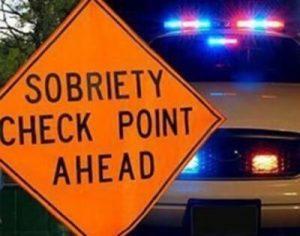
Every year, thousands of Georgia drivers find themselves unexpectedly approaching a DUI checkpoint, headlights reflecting off the "Sobriety Checkpoint Ahead" sign. You may feel nervous and unsure of what to do. Maybe you're driving home from a downtown Atlanta bar, leaving a Bulldogs football game in Athens, or heading back from River Street in Savannah.
What do you do? Can you refuse to go through the DUI checkpoint? If you can't turn around, do you have to answer the officer's questions? Are you required to take field sobriety tests?
Before you panic, know your rights – in Georgia, you can refuse to go through a checkpoint under certain conditions. If you do decide to proceed, what do you do?
In this guide, Atlanta DUI attorney Bubba Head answers your most pressing questions about DUI checkpoints and provides step-by-step guidance on how to protect yourself before, during, and after a DUI stop. You'll learn the best ways to legally refuse a DUI checkpoint, how to assert your right to remain silent and avoid self-incrimination, and what to do if you're arrested for drunk driving at a police checkpoint.
DUI checkpoints are legal in Georgia, but only when police run them inside specific limits. A roadblock that falls outside those limits can be challenged, and the evidence gathered there may be thrown out.
Police call them sobriety checkpoints, roadblocks, or safety checks. Courts treat them as a narrow exception to the usual rule for traffic stops. Normally an officer needs an individual reason to stop your car. At a checkpoint, officers stop drivers who have done nothing suspicious at all. That exception survives only because the stop is supposed to be brief, neutral, and tightly controlled.
Questions about DUI checkpoints legality almost always come down to how one particular roadblock was planned and run. Georgia courts generally consider factors like these:
Every one of those factors is something a defense lawyer investigates after the fact. Was there a written supervisory authorization, and when was it signed? Did the officers follow the stopping pattern the order described, or did they start waving cars through when traffic backed up? Was the site lit and marked?
The answers come from roadblock paperwork, dispatch records, officer testimony, and any video. Depending on how the checkpoint was run, those details can support a motion to suppress the evidence that followed the stop.
This analysis rests on the Fourth Amendment to the U.S. Constitution and on the search-and-seizure provision of the Georgia Constitution (Art. I, Sec. I, Par. XIII). Whether a specific roadblock holds up depends on facts a lawyer has to dig out of the record.
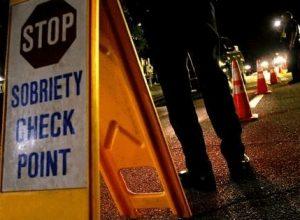
Advance notice is not just a courtesy to drivers. Georgia agencies are expected to publicize checkpoints ahead of time, and how a roadblock was announced, or whether it was announced at all, can become part of a later challenge. Notice ties back to the planning factor above. A checkpoint that a supervisor approved in advance usually leaves a paper trail, and the public announcement is part of that trail.
For you as a driver, the practical value is simpler. Knowing where roadblocks tend to appear on a holiday weekend helps you arrange a ride home instead of making that decision at the last second.
Be realistic, though. Announcements are typically made, but they can be hard to locate, and they are not always specific about the exact spot or hour.
Under Georgia law, police must post DUI checkpoints ahead of time, but these announcements can be hard to find. Some ways to find DUI checkpoints are through local news websites, the radio, and newspapers, as well as police department social media pages.
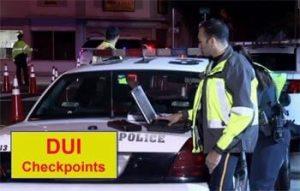
If you're looking for an app to find these checkpoints, the Waze App is the most reliable app for finding DUI roadblocks as it provides real-time updates from drivers ahead of you. The "police alerts" section is particularly useful. Here is how to activate that feature: Even though the Waze app does a good job of notifying you of where these DUI stops are, it isn't 100% reliable – especially late-at-night when there are less motorists on the road to put these 'police ahead' alerts into the app. If you want to know more about where DUI checkpoints are (and how to avoid them), read our page about finding DUI checkpoints near me.
Can you turn around at a DUI checkpoint? Yes, if you can do it legally. Under Georgia law, you can refuse to go through these DUI stops, but you have to do so without violating traffic laws.
However, police often station a 'chase' car to go after any vehicle that tries to abruptly turn around or make an illegal maneuver. If you make a sudden U-turn, fail to signal, or drive erratically, officers can pull you over on the basis of a traffic violation. Use your turn signals, move slowly and deliberately, and follow all posted traffic signs.
But, you are well within your Fourth Amendment rights to avoid this sobriety checkpoint, as police can't simply pull you over on a hunch that you refused to stay in line due to your intoxication levels. This is supported by Michigan v. Sitz, 496 U.S. 444 (1990), where the Supreme Court upheld checkpoint constitutionality but required stops to be non-arbitrary.
The catch is that the turn gives officers a close look at your driving. They are watching for an independent reason to stop you. Common ones include:
That last one matters more than drivers expect. Turning into a business lot and stopping there is different from cutting through it. If you pull in, park, and go inside, you have used the road the way anyone else would. If you swing through the lot without stopping and come back out past the checkpoint, an officer may treat that as an evasive maneuver paired with a traffic violation.
Avoiding a roadblock is not an admission of anything. Drivers turn away for ordinary reasons: a long line, a child asleep in the back seat, a shift starting in ten minutes. Standing alone, a lawful turn is not proof that anyone was drinking.
Even so, never tell an officer you were trying to avoid the roadblock. That one sentence hands the state evidence it did not have. If you are stopped after turning, be polite, hand over your license and proof of insurance, and say nothing about why you changed direction.

Understanding your rights during a DUI checkpoint is mostly a matter of knowing which parts are required and which parts are voluntary. Most drivers assume that everything an officer asks for is mandatory. It is not.
The four questions below cover the moments that decide most checkpoint cases. What do you have to say, and what should you never volunteer? Can an officer order you out of the car? Are the roadside evaluations optional? And what happens if you refuse the official breath test after an arrest?
You can be calm and polite and still decline. Those two things are not in conflict. A respectful tone costs you nothing. Agreeing to voluntary tests can cost you a great deal. Keep your hands visible, follow lawful commands about where to stand, and decline the evaluations clearly and without arguing.
If you can do it safely and openly, start recording on your phone. A recording captures the exchange, the officer's tone, and how the checkpoint was set up. That record can matter later, when your lawyer reviews whether the stop was handled properly.
No. Remain silent. You are only required to give your name and address – nothing more. Paragraph XVI of the Georgia Constitution guarantees your right to remain silent and avoid self-incrimination. Never admit to trying to evade the checkpoint.
This is the first step to proving "seizure" and the officer's exercise of dominion over you. This implicates both the federal 4th Amendment but also the Georgia Constitution (Paragraph XIII.) If your phone camera is recording, it will capture your conversation, and the officer's tone of voice, to help your DUI lawyer win your suppression motion in the criminal case, at a later date.
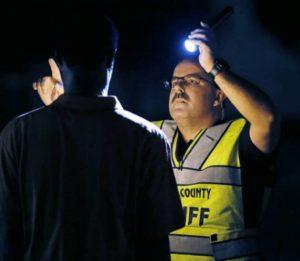
In Georgia, you don't have to take any of the field sobriety tests. They are 100% voluntary. Never agree to let an officer "check your eyes" or get you to participate in ANY sort of evaluations. The Standardized Field Sobriety Tests (SFSTs) – the Walk-and-Turn, One-Leg-Stand, and the HGN Test (DUI Eye Test) – are based on bogus science and designed for you to fail. Your 'performance' can be used as evidence against you. The police must follow strict instructions when they administer these exams, but most fail to do so. Don't expose yourself to these tests!
Yes, you can refuse a breathalyzer test in Georgia, but there are consequences to doing so. Under the Georgia Implied Consent Law and the implied consent notice and testing statute, a DUI refusal (of the post-arrest BAC test) can suspend your license for a full year. An officer can seek a search warrant for a blood draw even if you refuse. If you take a breathalyzer test, you have the RIGHT to request an independent blood, breath, or urine test at your own expense. Your attorney can then use this second test as evidence to fight for your innocence.
You have been booked into the county jail, and right now the whole thing feels unmanageable. Take a breath. This is the point where the case actually starts, and where the details of that roadblock begin to matter.
A DUI defense attorney who handles checkpoint cases works backward through the stop. Every factor that makes a checkpoint lawful is also a place where it can fail. Defenses that may apply to your DUI checkpoint case include:
Those are the procedural failures that most often lead to suppression at checkpoint stops. When a judge agrees that a roadblock was not properly authorized, not run to a set pattern, not safely placed, or not staffed by trained screening officers, the evidence collected there can be excluded. What happens after that depends entirely on the facts of the case, and no lawyer can tell you the result in advance.
Luckily, our law firm has ex-Roswell and Cobb County police officer Cory Yager on staff. If anyone knows how the police operate at a roadblock, it's him. Knowing what the paperwork should look like turns a vague complaint about a checkpoint into a specific, documented challenge.
A checkpoint arrest raises questions no article can answer for your case. Was that roadblock authorized in writing? Did the officers follow the pattern they were given?
William C. Head has practiced DUI law in Georgia for 47 years. His law partners include Cory Yager, a former police officer, and Larry Kohn, who has practiced with the firm for more than 20 years. The firm handles checkpoint cases across Georgia, from a DUI first offense to a second DUI in GA.


Move quickly. Beyond the criminal case, a refusal or a test result triggers a separate administrative issue with your driver's license, and that one runs on a short deadline. Waiting can cost you an option you would otherwise have.
A first call is a review, not a sales pitch. Anyone facing DUI charges after a roadblock stop can ask what the record actually shows. We look at how the checkpoint was set up and run, what was said and tested at the roadside, and what options realistically exist from here.
Call William C. Head, PC at (404) 567-5515 for a free consultation, or fill out our no-obligation, confidential online case evaluation form.

Are DUI checkpoints legal in Georgia?
Yes. Georgia allows sobriety checkpoints, but only when police run them within limits. Supervisors must approve the roadblock in advance, officers must stop cars on a set pattern rather than by hunch, the stop must be brief, and the site must be safe and clearly marked as a police operation.
Can you turn around at a DUI checkpoint in Georgia?
Yes, as long as you do it without breaking a traffic law. Signal, turn where turning is allowed, and drive normally. Officers often watch for an illegal U-turn, a crossed solid line, or a cut through a parking lot, because any of those gives them a separate reason to stop you.
Do I have to roll my window all the way down at a Georgia roadblock?
Lower it enough to hand the officer your license and proof of insurance and to hear each other clearly. A window cracked an inch invites suspicion and a longer stop. Hand over your documents, keep your answers short, and remember you still do not have to discuss where you have been or what you have had to drink.
How long can police keep me at a DUI checkpoint?
The screening contact is meant to be brief. Officers check your license and look for signs of impairment, then send you on. They can extend the stop only if something during that contact gives them a reason to investigate further. A detention that drags on without such a reason can be challenged later.
Can a Georgia DUI checkpoint arrest be thrown out?
It can be challenged. If the roadblock was not properly authorized, not run to a set pattern, unsafely placed, or staffed by untrained officers, your lawyer can move to suppress the evidence that came from it. Whether that motion succeeds depends on the specific facts, records, and testimony in your case.
Finding DUI Checkpoints Near Me Tonight
Beating BAC Tests and Field Sobriety Tests: How to Beat a Breathalyzer Test in Georgia
How to Challenge Field Sobriety Tests in Court